
What is the difference between Silver and German Silver
When you look at both metals for the time they seem to be the same thing. If you look closer at Silver and German Silver you will see that they are actually very different. Both are different, in ways like what they are made of how long they last how much work it takes to keep them nice and what people use both metals for every day.
Silver is a precious metal that people commonly associate with fine jewellery, luxury items, and long-term value. In contrast, it contains no actual silver. Instead, manufacturers create it by combining copper, nickel, and zinc to produce an alloy with a silver-like appearance. As a result,it offers an elegant look at a much more affordable price.
Moreover, the two materials age differently and require different levels of care. For example, silver may tarnish over time and, therefore, often requires regular polishing to maintain its shine. In contrast, it is valued for its durability and resistance to everyday wear. Furthermore, it retains its attractive appearance for longer periods when properly maintained. As a result, many people consider it a practical option for daily use.
In this guide, we’ll explore what truly sets Both apart. From the materials used to make them to the way they age and the purposes they serve, you’ll discover the unique qualities of each option. By the end, you’ll have a clear understanding of their advantages and limitations. Therefore, you’ll be better equipped to choose the material that best suits your needs the next time you shop.
Understanding Silver
Silver is a precious metal that people have valued for centuries. It is beautiful, rare and versatile. Silver is used in jewellery, decorative items, coins, utensils and investment products.
Pure Silver is 99.9% Silver. It is often called fine Silver. This makes it more durable.
Key Characteristics of Silver
- It is valuable
- Bright white
- Shiny and elegant
- Soft and easy to shape
- Good conductor of heat and electricity
- Considered a luxury material
Common Uses of Silver
Silver is use in:
- Jewellery
- Coins
- Investment bars
- Luxury gifts
- Pooja accessories
- Dinnerware and utensils
- High-end home décor products
What Is German Silver?
It does not contain any Silver. Instance At glance it looks like real silver because of its shiny and nice finish. It does not have any actual silver in it. Instead makers mix copper, nickel and zinc to create this alloy.
As a result it has a look like silver but is much cheaper. Also it is strong, durable. Does not wear out easily. It keeps its shine for a time if you take good care of it.
- Copper
- Nickel
- Zinc
It was develop as an alternative to Silver. Today it is use for products, gifts, home décor accessories, pooja items and handicrafts. It offers elegance at a price.
Composition of It
It alloy contains:
| Metal | Approximate Percentage |
Copper 50–65% Nickel 10–30%
Zinc 15–35%
The exact composition can vary.
Why Is It Call Silver?
The name “GERMAN SILVER” came from metalworkers who developed and popularized the alloy.
Why Is German Silver Called “Silver”?
The name German Silver often creates confusion because many people assume it contains real silver. However, that is not the case. German Silver is actually an alloy made from copper, nickel, and zinc, and it contains no silver at all. So, why is it called “silver”? The answer lies in its appearance. Because this alloy has a bright, shiny finish that closely resembles real silver, it earned the name “German Silver” over time. Additionally, the term originated in Europe, where German metalworkers popularized this silver-like material for decorative and practical purposes.
Moreover, German Silver became widely appreciated because it offered the elegant look of silver without the high cost associated with precious metals. As a result, manufacturers started using it in a variety of products, including jewellery, pooja essentials, photo frames, cutlery, trays, and home décor pieces. Furthermore, it is known for its durability and resistance to everyday wear, making it a practical choice for regular use.
At the same time, it is important to understand that German Silver does not hold the same intrinsic value as real silver. While genuine silver is a precious metal often associated with investment and luxury, German Silver is valued mainly for its affordability and attractive appearance. Therefore, consumers who want the sophisticated charm of silver at a budget-friendly price often prefer German Silver products.
In simple terms, German Silver is called “silver” not because of its composition, but because of its silver-like shine and elegant finish. Consequently, although the name can be misleading, understanding the difference helps buyers make informed decisions and choose the material that best suits their needs and budget.
What Silver and German silver are use For
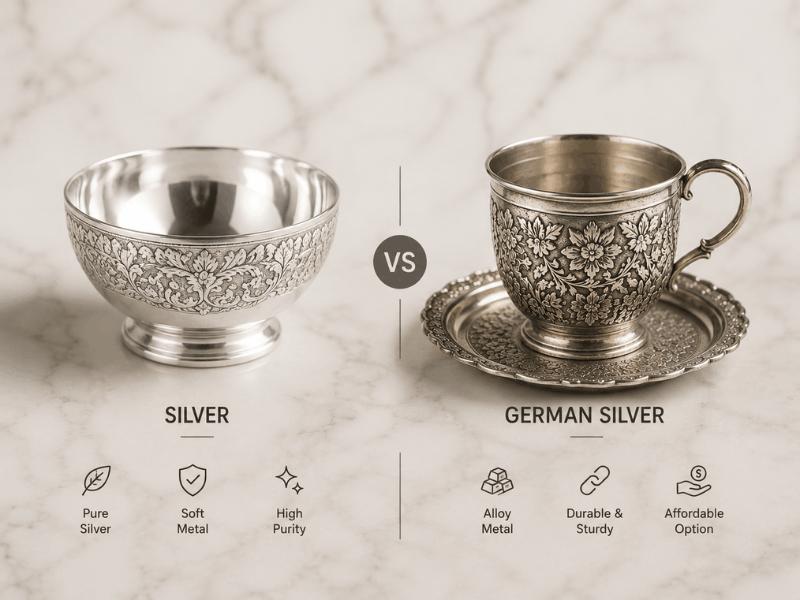
Knowing the key differences helps buyers choose the right material.
When comparing silver and German silver, the major differences lie in their composition, value, durability, and purpose. To begin with, silver is a precious metal that naturally occurs in the earth and is highly valued for its purity, investment potential, and luxurious appeal. In contrast, German silver is an alloy made from copper, nickel, and zinc, and despite its name, it contains no actual silver. As a result, silver is significantly more expensive, whereas German silver offers a similar elegant appearance at a much more affordable price. Moreover, silver is often chosen for fine jewellery, premium gifts, and investment pieces because of its intrinsic value. On the other hand, German silver is widely preferred for decorative items, pooja essentials, photo frames, trays, cutlery, and home décor products due to its durability and cost-effectiveness.
Composition
Silver
Silver is a precious metal.
German Silver
Its a man-made alloy of copper, zinc and nickel.
Difference:
Both are fundamentally different materials.
Understanding Both Metals
It on the hand is not a precious metal at all. It is a mixture of copper, nickel and zinc.
Value and Price of Both metal
It is not just pretty and nice to look at. because of that. Silver is something that people want to have. It is worth a lot. People. Sell silver all around the world.
How Both metals Look
Silver has a bright and luxurious shine. Looks very expensive. It looks a lot like silver. It can appear a bit grey or less shiny after some time.
Difference: Its natural brilliance gives it a distinct sense of luxury that sets it apart.
Difference: it is more durable for use.
Weight of Silver and German Silver
Silver feels heavy and dense. It is usually lighter.
Difference: Silver feels more solid in your hand.
Taking Care of Both Metals
Silver needs to be polish to keep it shiny. It is easier to take care of.
Difference: Both need some care. Silver needs more attention.
Investment Value of Both metals
Silver holds its value and offers investment potential. German silver does not have any investment value.
Difference: Silver serves as an asset with long-term value another one metal is mainly for decoration.
What Silver and German silver are use For
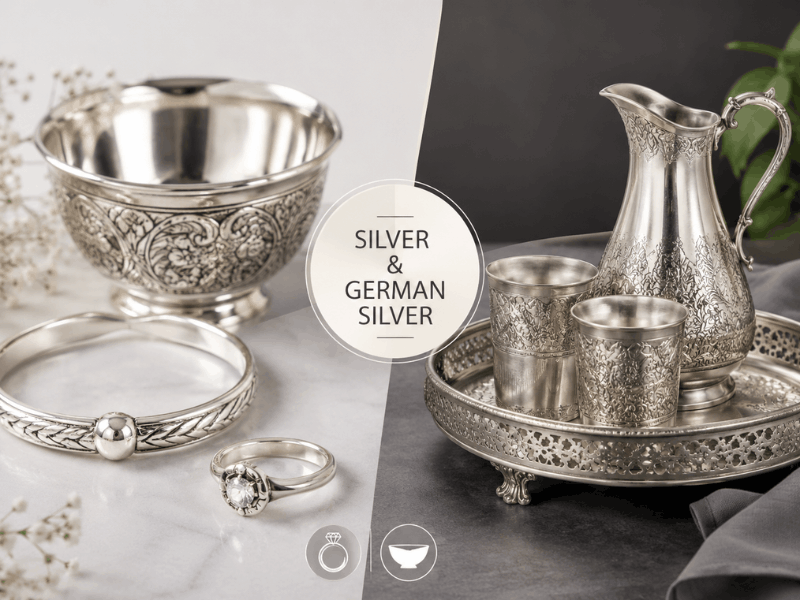
Although silver and German Silver may look similar, they are often use for different purposes based on their properties, value, and practicality. To begin with, silver is widely use in fine jewellery, luxury gifts, coins, and investment products because of its precious nature and long-term value. Additionally, it is commonly choose for premium cutlery, decorative pieces, and religious items, especially during festivals and special occasions. Moreover, many people consider silver a symbol of elegance, prosperity, and tradition.
On the other hand, German Silver is primarily use for decorative and everyday items due to its affordability and durability. For instance, it is a popular choice for pooja essentials, trays, bowls, photo frames, candle holders, gift articles, and home décor pieces. Furthermore, businesses often prefer German Silver for corporate gifting and festive collections because it offers the sophisticated appearance of silver at a much lower cost. As a result, consumers can enjoy stylish and elegant products without making a significant investment.
Ultimately, both materials serve different needs. While silver is prefer for luxury, sentimental value, and investment purposes, German Silver is value for its practicality, attractive finish, and budget-friendly appeal. Therefore, understanding how each material is use can help buyers choose the option that best matches their lifestyle, preferences, and spending plans.
Silver is used for:
- Jewellery
- Luxury gifts
- Investment products
- High-end utensils
German silver is used for:
- Decorative bowls
- Home decor items
- Pooja
- Corporate gifts
- Handcrafted artifacts
Difference: The right choice often depends on the purpose behind your purchase.
How to Tell SILVER or GERMAN SILVER Apart
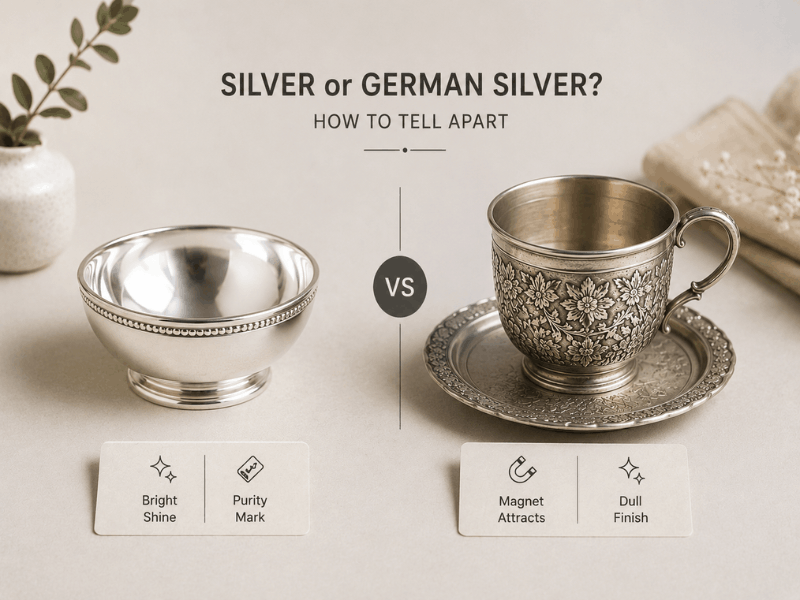
At first glance, silver and German Silver can appear almost identical, which is why many buyers find it difficult to distinguish between the two. However, there are several simple ways to tell them apart. To begin with, check for a hallmark or purity stamp on the item. Genuine silver usually carries markings such as 925, 999, or other purity indicators, whereas German Silver typically has no such silver purity stamp because it contains no real silver. Additionally, consider the weight and value of the piece. Real silver tends to be heavier and significantly more expensive due to its status as a precious metal. In contrast, German Silver is generally more affordable and is valued mainly for its appearance rather than its material worth.
Furthermore, observing the finish can also be helpful. Although both materials have a silver-like shine, genuine silver often has a richer and more luxurious glow, while German Silver may have a slightly cooler or less refined appearance over time. Moreover, if you are uncertain, consulting a trusted jeweller or requesting a professional purity test can provide complete clarity. Therefore, by checking the hallmark, comparing the price, examining the overall look, and seeking expert advice when needed, buyers can confidently identify whether an item is made of real silver or German Silver. Ultimately, understanding these differences helps you make informed purchasing decisions and ensures that you get exactly what you are paying for.
Check for Hallmarks
Real silver products usually have a hallmark that shows its purity. Examples include 925 Silver, Sterling Silver and 999 Silver. It does not have these hallmarks.
Look at the Price
Authentic silver is an investment in quality, beauty, and lasting value.
Weight Test
One way to distinguish both metal is by weight—silver typically feels noticeably heavier.
Magnet Test
Real silver is not magnetic.
Get it Verified
For purchases it is best to consult a professional jeweler.
Why Choose Silver
It is Associated with Luxury
Silver products are often seen as high-status.
It Lasts Long
With proper care, silver items can be cherished for generations..
Why Choose German Silver
It is Affordable
Offers a like appearance at a much lower cost.
It is Great for Gifting
silver gift items are perfect for weddings, anniversaries and festivals.
It is Strong
It is durable and can withstand use.
Comes in Many Designs
Artisans can create designs and patterns with it.
It is Budget-Friendly
silver allows homeowners to achieve an elegant look without spending too much.
For Gifting
The choice between silver and German silver depends on your purpose and budget.
Silver is suitable for luxury gifting, investment-oriented gifts and traditional family heirlooms.
It is ideal for corporate gifts wedding return gifts, home decor gifting and budget-conscious gifting.
For people it offers the perfect balance between elegance and affordability.
Silver vs German silver for Home Decor
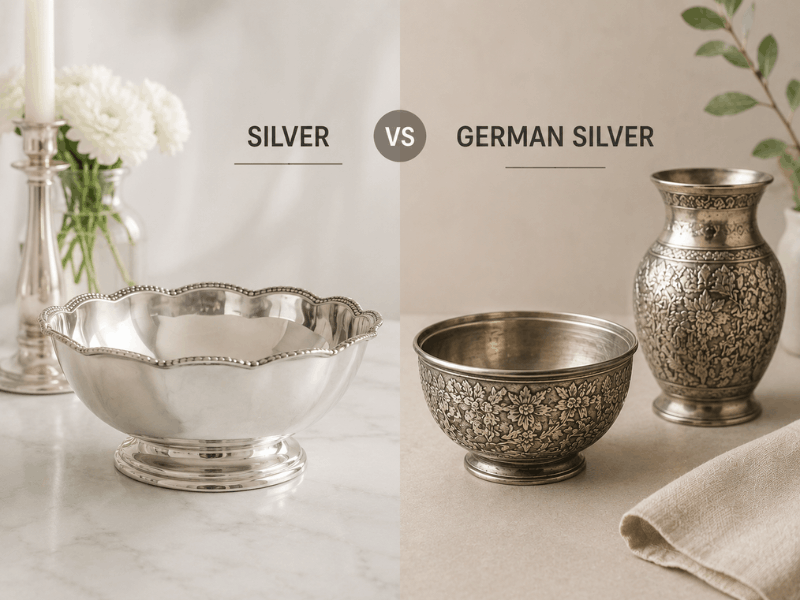
Elegant in appearance and practical in price, it has become a preferred choice for stylish interiors.
Popular German silver decor items include:
- Bowls
- Flower vases
- Wall hangings
- Candle holders
- Pooja accessories
- Serving trays
- Platters
How to Take Care of Both
Maintenance helps preserve the beauty of both materials.
Cleaning German Silver
- Use a cloth.
- Store in -tarnish pouches.
- Avoid moisture.
- Keep away from chemicals.
Cleaning Silver
- Dust regularly.
- Wipe with a cloth.
- Dry after cleaning.
- Avoid cleaners.
Which is Better ?
There is no one-size-fits-all answer. The better option depends on your needs.
Reasons to Consider Silver
- You want a metal.
- Investment value matters.
- You prefer luxury products.
- You are looking for heirloom-quality items.
Reasons to Consider German Silver
- You want products at an affordable price.
- You need gifting items.
- Durability is important.
- You want home decor without a high price tag.
For gifting and decor purposes it provides excellent value. For wealth preservation and luxury ownership silver remains the choice.
Common Misconceptions About Silver
Myth 1 – German Silver Contains Real Silver
This is not true. Traditional German silver does not contain any silver.
Myth 2 – German Silver is Inferior
Not. It serves a purpose and offers excellent durability and affordability.
Myth 3 – German Silver Looks Cheap
Quality it products can look very elegant and sophisticated.
Final Thoughts
Silver is a metal known for its investment value and luxury appeal. German silver on the hand is an alloy that delivers a silver-like appearance at a lower cost.
Invest in silver for a lifetime of value. Choose it for graceful designs that make a statement without breaking the bank.
By understanding the differences between these both metal you can make an informed purchasing decision.
FAQ
Is German Silver Real Silver?
No it does not contain silver. It is an alloy of copper, nickel and zinc.
Why is it Cheaper?
German silver is made from -precious metals making it more affordable.
Does German Silver Tarnish?
Yes, it can lose its shine over time. Proper cleaning and maintenance help preserve its appearance.
Which is Better for Gifting?
Silver often becomes the preferred choice for milestone celebrations and meaningful gifts. German silver delivers style and versatility for thoughtful gift-giving.
Can German Silver be Used for Home Decor?
Yes,it is widely used for items.